

Ever heard of an “umbrella term?” If not, a simple way to explain this in gaming terms is by picturing the genre of action games. Under action games, you’ll find shooters. Shooters is a very broad term because games like Call of Duty and Space Invaders are found under that umbrella and are widely different. That’s why we create subcategories, because under Action games is the layer of shooters, which then split into things like first-person shooters or shoot ’em ups. In this case, idle games fall under the category of incremental games.
These games, although I’ve heard people argue against calling them video games, are games that require minimal to no interaction to play. Hence the name, idle games, because they play themselves, but they’ve evolved to what they were a decade ago. A clear example of an early idle game, I am sure many people have heard of, is:
AdVenture Capitalist

- Developer: Hyper Hippo Games
- Publisher: Hyper Hippo Games
- Platforms: Everything, honestly.
This is one of my first introductions to the idle games genre, unless you count RuneScape. In this game, you are what the title says: a venture capitalist. This is done by clicking or “purchasing” these, let’s call, money generators. You click on the money generators to generate money, and once you have enough money, you can purchase a worker so they can automatically generate money for you for that specific generator.
And that’s it. That’s the game. But man, did I love seeing those numbers go up, and the bars fill up.
While this is a good example of idle games, they’ve changed throughout time. While many idle games today do have you simply waiting, something that I’ve noticed is that they’re now hybrids. By intermingling with a different genre, even if only slightly, they can fuse the best of both worlds, such as in the case of Horripilant.
Horripilant
- Developer: Alexandre Declos , Pas Game Studio
- Publisher: Black Lantern Collective
- Platforms: Steam
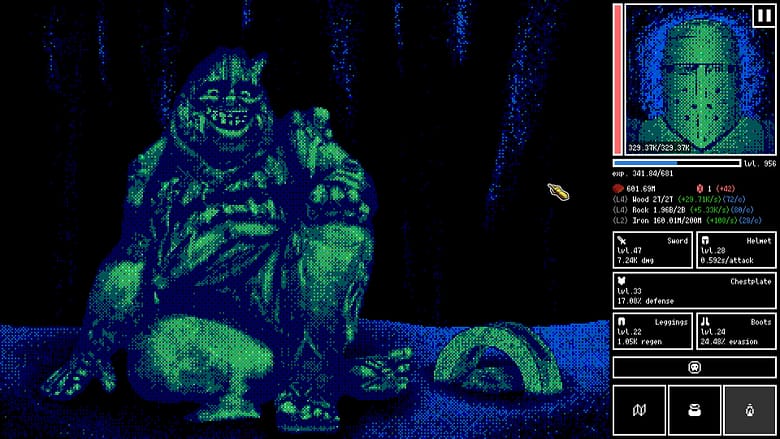
Even on the surface, Horripilant gives the player the impression that there might be something more to the gameplay. While the gameplay loop is what I expected from an idle game, such as key items hiding behind floors, which are cleared automatically when you go down the dungeon, and the main resource being obtained passively and you progressively improve it, what set this game apart are two key details: atmosphere and puzzles.
It’s funny to think that an idle game has puzzles, seeing that it’s quite the opposite as you need to pay attention to solve the task, but it’s true. Horripilant features point-and-click like puzzles that had me looking around rooms, thinking back to weird phrases spoken, and looking up answers to cross the bridge. In my defense, that bridge thing was crazy, and I never said I was good, or even decent, at puzzles.
The second is the atmosphere. When it comes to idle games, especially with the other ones I will be showcasing, presentation means everything, and in this case, the dread was present and great. In Horripilant, you’re a knight who wakes up confused in a horrid, dark dungeon, and a freakish head from a dark hole speaks to you to venture forth. The art, the sound, the creeps you find hiding in the dark, they’re all very cool, and because it’s a clicker/idler, I didn’t really ever feel the danger. This is positive or negative depending on your perspective.
I highly recommend this to people who like horror and idle games, although depending on your taste, not that horrifying, but it’s subjective.
Faceminer
- Developer: Wristwork
- Publisher: Wristwork Ltd
- Platforms: Steam
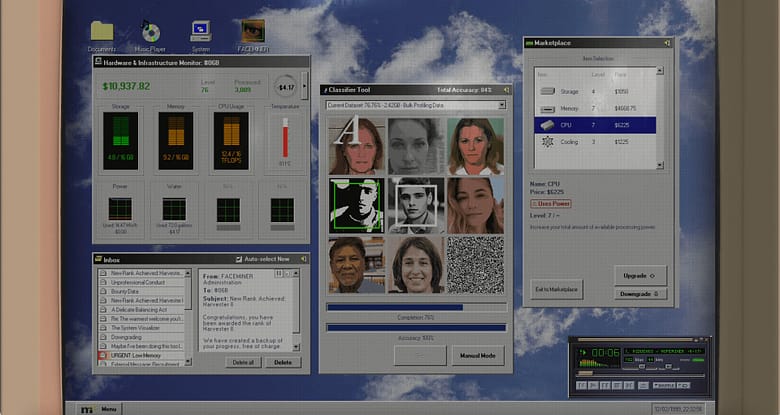
Faceminer is a horror idler, although the horror is less upfront. You’re a new employee for a company whose job is surveillance, and this is done by going through pictures of people’s faces. Call it data harvesting, call it “Big Brother,” call it spying, call it many things, but it’s ultimately for a better cause! That being your pockets.
Faceminer is your average idle game, in which you click to get money, automate it so it does it better than you could, and in this case, spend money not only on upgrades but also on your machine so it can run the upgrades. What’s very engaging about Faceminer is the narrative aspect, as you’ll receive messages from other workers which can make you feel a bit odd.
Rusty’s Retirement
- Developer: Mister Morris Games
- Publisher: Mister Morris Games
- Platforms: Steam
I honestly do not have any experience with this game, but it was the first time I heard of “bottom-of-the-screen” or “window-border” idlers. While many of you may think that, yes, people don’t pay attention to idlers and will have it on the second screen, this is a bit different from just that.
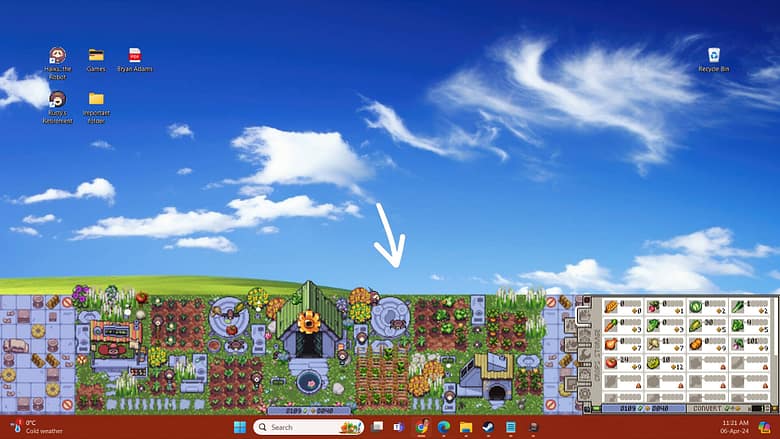
Rusty’s Retirement is an idler that rests at the bottom of the screen. The game blends to your desktop, and not like a borderless window, but like a little eco-system that’s functioning while you do whatever it is you’re doing. What’s very neat about Rusty’s Retirement is that, because it’s an idle farming game, you get to see the animal roam around, and your workers work, as you get your own job done, while also being able to decorate whenever you want.
Spirit City: Lo-fi Sessions
- Developer: Mooncube Games
- Publisher: Mooncube Games
- Platforms: Steam
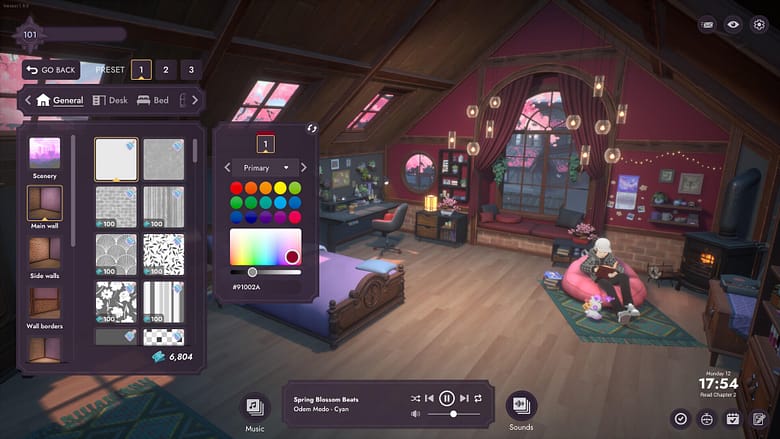
Spirit City: Lo-Fi Sessions is a game I’ve very familiar with, as it’s the game I had open for the entirety of my novel. A new addition to the idler/incremental genre is productivity games, which are games that function like an idle game but have other functions to boost productivity, such as having a timer, to-do list, habits, reminders, etc. As you play Spirit City: Lo-Fi Session, you gain currency, which then can be spent to customize your character, and there are also secrets you can uncover to unlock pets that will just hang out with you.
The built-in soundtrack is also very relaxing, and even if you don’t like it, you can use its YouTube browser, although I personally didn’t have a good time going through it.
On-Together: Virtual Co-Working
- Developer: GigaPuff
- Publisher: Future Friends Games
- Platforms: Steam
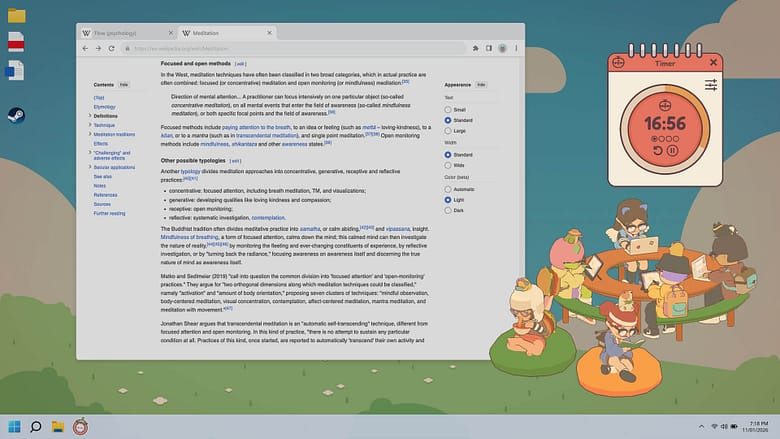
On-Together: Virtual Co-Working is an idler/productivity game, meaning it has everything one expects, such as a to-do list, timer, etc. What’s neat about this one is that it’s a productivity game you can play with your friends. The lobby is sort of island filled with a few activities, but when you and your friends decide to focus, you can switch to desktop mode and see your character and your friends doing something, such as reading, meditating, fishing, and other activities. A social idle game is not something that I ever imagined, but it’s a neat concept.
Conclusion: The Future of Hybrid Idle Games
While idle games, at their core, are games that require minimal to no interaction, I think it’s very interesting when developers turn it into a hybrid. By adding puzzles, social aspects, or just modernizing the experience, it does extend the genre into more people’s hands.
It took me a while to notice that the mobile market is full of idle games as well, but the mobile market mixed its worst genre with the idler genre: gacha.
Also, I went into the reviews of these games, because I was curious, and it’s insane to me that people complain about an idler being grindy. It’s like complaining that a cozy game is too relaxing or friendly.
Discover more from What's Inked In My Mind: Video Games, Comics, and Writing
Subscribe to get the latest posts sent to your email.

What do you think?